

Parents no longer need more screenshots, more browser tabs, or more guesswork to understand messaging activity. The big shift in WhatsApp and Telegram last seen tracking is simple: people are moving from manual checking toward pattern analysis, because isolated moments rarely explain behavior as well as repeated timing trends do.
In my work on online activity tracking and digital wellness, I have seen this change happen gradually and then all at once. A few years ago, many families relied on direct, one-off observation: opening WhatsApp Web, checking Telegram Web, asking a partner to look, or noticing a single last seen time and trying to interpret it. Now the category is maturing. Users increasingly want an app that shows recurring habits, not just a single status snapshot.
Luna - Parental Online Tracker is a mobile app for families who want to monitor WhatsApp and Telegram online status patterns on mobile platforms in a more structured way. That matters because the real question most parents ask is not, “Was my child online at 9:14?” It is, “Is there a repeat pattern here that I should pay attention to?”
Manual checking is losing ground because it creates more noise than clarity
For years, the default approach was obvious. Open the app. Look for last seen. If that is not enough, check again later. Maybe compare what appears in WhatsApp with what appears in Telegram. Maybe keep notes. Maybe rely on memory.
This still happens, but it is becoming less practical for three reasons.
First, messaging behavior is fragmented. A teenager may use WhatsApp for family groups, the Telegram app for specific communities, and switch between devices throughout the day. One-off checks miss that rhythm.
Second, manual observation is emotionally misleading. A single late-night online moment can look alarming without context. But if you compare it with a broader pattern, it may turn out to be a short recurring check-in after homework, not a long overnight session.
Third, web-based workarounds are often overvalued. WhatsApp Web and Telegram Web are useful access points, but they are not trend tools by themselves. They show what is happening in the moment; they do not automatically help families interpret repeated timing behavior over days or weeks.

Pattern analysis is becoming the category standard for a reason
What users now expect from this category is changing. They are not only looking for direct last seen information. They want context: when activity spikes, whether evening use is becoming later, whether online periods are short and routine or irregular and prolonged.
That shift mirrors a broader change across digital wellness products. People are less satisfied with raw data alone. They want filtered meaning.
Here is the clearest comparison I can make:
| Approach | What it shows well | What it misses | Best for |
|---|---|---|---|
| Manual status checks | A single moment of activity | Frequency, timing trends, recurring habits | Occasional curiosity |
| Web-based observation | Real-time visibility from a browser | Longer-term interpretation and comparison | Short-term spot checks |
| Pattern-based tracking | Repeated online windows and behavior changes | It still requires reasonable expectations and context | Families monitoring habits over time |
That is why more users now judge a tracking solution by whether it helps answer practical questions, not whether it simply captures a status. In that sense, the market is growing up.
User expectations are shifting from proof to interpretation
One of the biggest behavior changes I have observed is this: families are less interested in “catching” a moment and more interested in understanding a routine. That is a healthier and more sustainable use case.
A parent might once have checked whether a child was online at midnight. Now the more useful question is whether midnight usage is becoming a pattern across school nights. Those are very different goals, and they require different tools.
This is also where generic alternatives fall short. Notes apps, spreadsheets, screenshots, and browser sessions can all collect bits of information. But they put the burden of interpretation on the user. Most families do not want to become analysts of their own messaging logs. They want a simpler view of what changed, what repeats, and what may deserve a conversation at home.
If you want that kind of outcome, Luna - Parental Online Tracker’s focus on recurring activity visibility is designed for that, rather than forcing families to build their own tracking workflow from scratch.
The best tools in this category are becoming more selective, not more complicated
There is a common assumption that better monitoring always means more data. I do not think that holds up in practice. Better usually means more relevant data presented with less friction.
When families compare options in this space, I recommend looking at five criteria:
- Ease of use: Can a parent understand the activity picture quickly without technical setup?
- Pattern visibility: Does the tool help identify repeated windows, not just one-time seen statuses?
- Cross-app relevance: Is it useful for both WhatsApp and Telegram behavior if that matches household usage?
- Signal over volume: Does it reduce noise, or does it simply show more timestamps?
- Fit for family use: Is it designed for ongoing parental awareness rather than casual curiosity?
This category does not need endless features. It needs better judgment about which features actually help. That is one reason many families now prefer purpose-built mobile tools over improvised methods.
This trend is strongest among families who care about routine, not surveillance
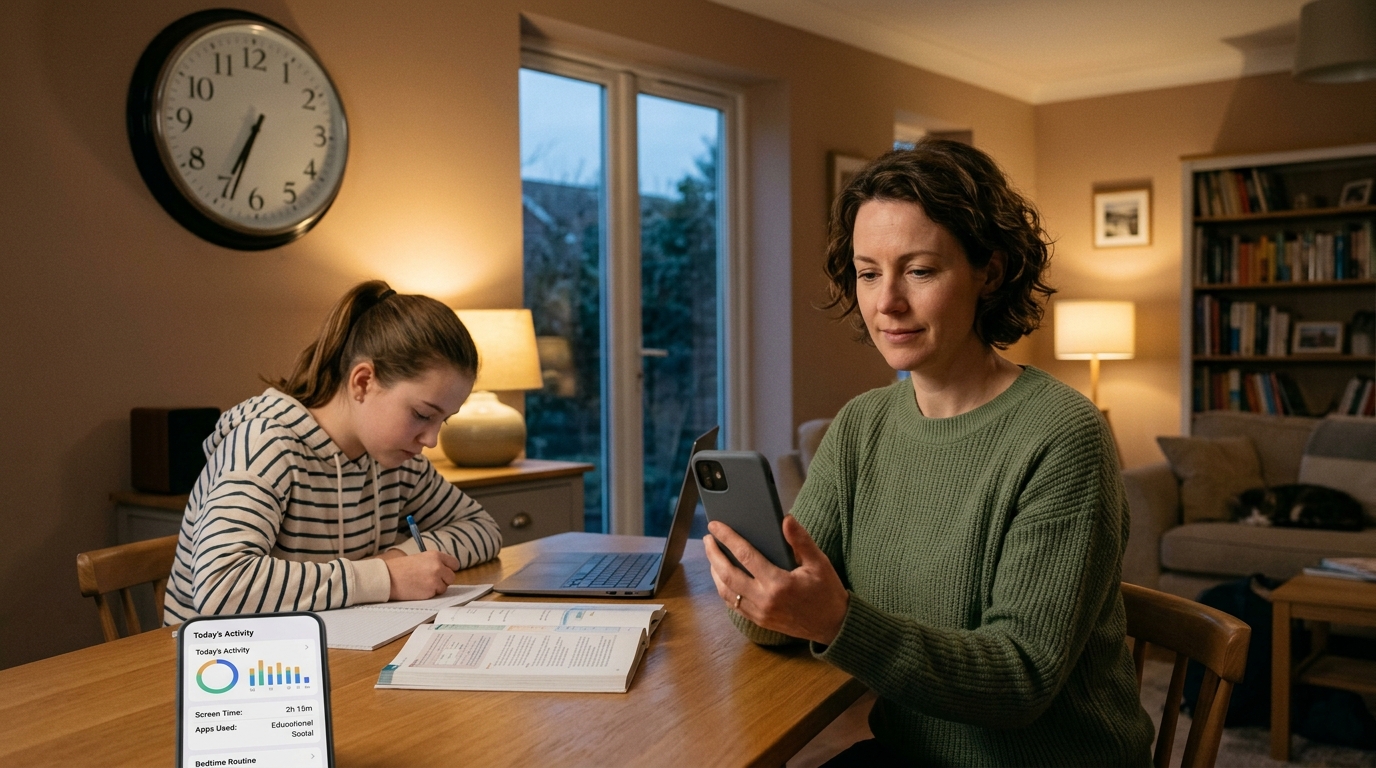
The target user profile is fairly specific. These tools are most useful for parents and guardians who want to understand messaging habits over time, especially when they are trying to set healthier boundaries around late-night phone use, school-night routines, or sudden changes in online behavior.
Who is this not for? It is not for people looking for drama, obsessive minute-by-minute checking, or a shortcut to interpreting every online moment as a problem. In practice, the healthiest use of a tracking app is to spot patterns that support calm conversations, not constant suspicion.
That distinction matters because the market is splitting in two directions. One direction chases more reactive usage: refresh, check, react, repeat. The other is moving toward calmer, trend-based awareness. The second direction is where I see the most long-term value.
Browser workarounds and modified apps are becoming less persuasive
Another market shift is that users are becoming more skeptical of patchwork solutions. Some still try to rely on WhatsApp Web, Telegram Web, or modified versions such as GB WhatsApp to piece together visibility. But the appeal of those routes is fading for a simple reason: convenience at the start often becomes inconsistency later.
A browser session is not a habit-analysis system. A modified app may look flexible, but it often creates reliability or trust concerns. And a workaround that depends on constant checking usually stops being practical after a few days.
That is why category demand is leaning toward dedicated mobile experiences. Not because users want something flashy, but because they want something repeatable. A good app removes the need to build your own process every day.
Actionable takeaways matter more than trend watching alone
Market trends are only useful if they change what you do. If you are evaluating this category now, I suggest a simple decision framework.
If your goal is occasional checking, manual observation may be enough. You probably do not need a dedicated solution.
If your goal is understanding repeated behavior, choose an approach built around trends, not isolated statuses.
If your household uses both apps, make sure the tool fits both WhatsApp and Telegram rather than forcing separate routines.
If you feel overwhelmed by too much information, favor tools that simplify interpretation instead of expanding raw logs.
If your real aim is a healthier family conversation, focus on consistent timing patterns, because those are usually more useful than one dramatic-looking seen timestamp.
Alerts can be helpful in the moment, but the broader trend in this category is that alerts work best when they support a bigger pattern view rather than replace it.
The future of this category will favor interpretation over raw access
I do not expect the next phase of this market to be about collecting more and more status points. I expect it to be about making activity easier to read, compare, and act on responsibly.
That is a meaningful change. It shifts the category away from reactive checking and toward informed observation. It also makes the space more useful for ordinary families, not just highly motivated users willing to monitor everything manually.
Even popular search behavior hints at this confusion. People often search broad terms, jump between tools, or even land on irrelevant topics like last of us while looking for last seen answers. The market is noisy. Clearer product categories help reduce that noise.
If you are comparing options today, the practical question is not whether a tool can show a seen status. Many methods can do that in some form. The better question is whether it helps you understand behavior over time without turning family monitoring into a full-time task.
That is where the category is heading. And honestly, I think that is a good sign.
For a broader look at the companies building in this space, Activity Monitor’s app portfolio overview gives useful context on how purpose-built mobile tracking tools are being positioned for family use.