

I still remember mapping out the early conceptual frameworks for what would eventually become Luna. After spending seven years analyzing digital wellness and online activity tracking, a distinct pattern had emerged: parents were exhausted. They were trying to solve a complex, multi-device problem using outdated, single-device tools. We realized early on that simply providing raw data wasn't enough; families needed context. Recently, Luna - Parental Online Tracker reached a significant milestone regarding active user setups, and the retention data we reviewed confirmed our initial hypothesis. Families aren't just looking for a tool; they are actively transitioning their entire approach to digital boundaries.
Cross-platform status analysis is the process of aggregating online visibility data from multiple messaging services into a single unified timeline, allowing families to identify digital routines without reading private message contents. This is a direct response to a fragmented digital reality. The days of simply glancing at a smartphone screen to understand screen time are completely over. Below, I will share the critical lessons we learned from our user base and how recent 2026 market data validates this profound shift in digital parenting.
Why does digital fragmentation break traditional monitoring?
The core problem families face today is the sheer volume and distribution of digital sessions. If you are relying on manual oversight, you are inevitably operating with blind spots. A teenager might have their primary smartphone in the living room, completely untouched, leading a parent to believe they are offline. However, digital engagement rarely stays confined to one piece of hardware.
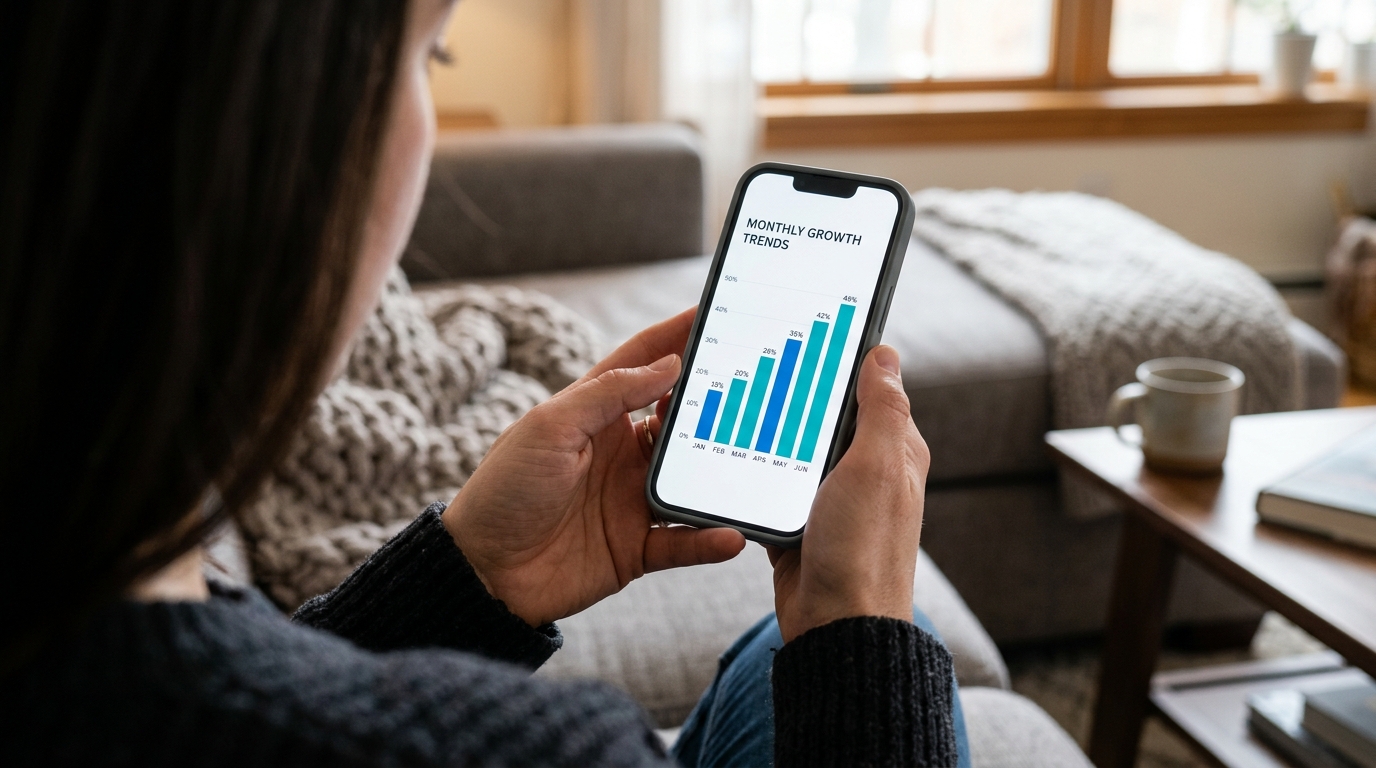
Recent data strictly reinforces this reality. According to the Mobile App Trends 2026 report published by Adjust, the global mobile application ecosystem is expanding at a rapid pace. In 2025, global app sessions increased by 7% year-over-year, while total application installs jumped by 10%. Furthermore, total consumer spending on mobile applications reached a staggering $167 billion. This volume of activity means that digital engagement is nearly continuous. Attempting to manually verify when a family member was last active is a fundamentally broken strategy because the usage is distributed across too many touchpoints.
What do high retention rates reveal about family habits?
When we analyzed the data from our latest user milestone, the most striking metric wasn't the total number of downloads, but the sustained retention. Parents who adopted cross-platform tracking stayed engaged with the application significantly longer than those who previously tried manual monitoring apps. The reason is simple: reduction of anxiety.
Traditionally, a parent might wake up in the middle of the night to check a specific app, trying to see the exact minute a child went offline. This creates an adversarial and stressful dynamic. What our user retention shows is that families strongly prefer passive measurement architecture over active policing. They want an application that does the heavy lifting in the background, providing structured insights only when necessary.
Interestingly, this preference for structured, transparent measurement is reflected in broader industry trends. The same Adjust 2026 report highlighted that iOS App Tracking Transparency (ATT) opt-in rates climbed from 35% in early 2025 to 38% in the first quarter of 2026. While primarily an advertising metric, it signals a distinct behavioral shift: when users understand the value exchange and trust the measurement architecture, they are increasingly willing to participate in data sharing. For families, this translates to open conversations about digital tracking rather than secretive monitoring.
Why do secondary screens hide the real story?
We often hear from parents who are confused about how their child seems to be online constantly, yet their phone usage metrics show minimal activity. The answer usually lies in secondary interfaces. A child might not be using the primary Telegram app on their phone at all. Instead, they have Telegram Web open in a browser tab while doing homework on a laptop.
The same applies to other networks. A student might be studying, but they have WhatsApp Web running in the background on their desktop. Furthermore, we frequently see the use of modified third-party clients like GB WhatsApp, which users install specifically to freeze their online status or hide their activity markers from native checks. Relying solely on the native application on a single device provides an incomplete, often misleading picture of actual digital habits.
Context matters immensely. It is perfectly common to observe a teenager deeply immersed in an intense, late-night console session of a game like The Last of Us, while simultaneously keeping a messaging client active on a secondary tablet to coordinate with friends. If a parent only checks the smartphone, they miss the entire interaction. Multi-platform analysis solves this by looking at the broader footprint of connectivity rather than a single device's screen time.
How is measurement architecture replacing manual oversight?
The defining theme of the 2026 mobile economy, as identified by industry analysts, is the transition away from basic reporting toward "AI + Measurement Architecture." Growth and understanding now come from integrating intelligent analysis into the core infrastructure. This is exactly what we built into Luna - Parental Online Tracker.

For families, this means moving away from a rudimentary log that simply states when someone was seen online. Instead, the focus shifts to recognizing patterns. Does late-night activity on weekends correlate with difficulty waking up for school on Mondays? Are there long, uninterrupted blocks of offline time that indicate healthy focused work?
If you want clear visibility without the burden of constant manual checking, Luna's pattern recognition is designed for that exact outcome. As Ali Yalçın noted when comparing cross-platform analysis with isolated manual checks, families who adopt unified timelines report significantly lower levels of daily friction.
How can you apply these insights to your own household?
Understanding the market data and the behavior of 100,000 users is helpful, but applying it to your own family requires a deliberate strategy. Here are the selection criteria you should use when deciding how to manage digital boundaries in a highly fragmented environment:
1. Prioritize cross-platform visibility over single-app depth.
Knowing exactly what time a profile went offline on one specific network is less valuable than knowing their general availability across all primary communication channels. Choose tools that aggregate data rather than isolate it.
2. Look for pattern alerts, not immediate notifications.
Your goal is to understand routines, not to intervene every time a status changes to "online." An effective application will alert you to deviations in established patterns—such as unexpected connectivity at 3:00 AM—rather than overwhelming you with constant, meaningless pings.
3. Ensure the approach respects privacy.
This is a critical distinction. The healthiest approaches to digital tracking involve monitoring the metadata—the "when" and "how long"—without ever attempting to access the "what." Reading message contents breaks trust and often drives teenagers to use encrypted alternatives or hidden devices. Tracking status patterns maintains boundaries while ensuring safety.
Our work at the mobile app company Activity Monitor has consistently shown that parents want tools that support their parenting, not tools that replace it. The shift from manual checking to intelligent pattern analysis is the most significant milestone we've observed in the past five years. By acknowledging the reality of web clients, secondary screens, and the sheer volume of 2026 app usage, families can finally establish digital guidelines that actually work in practice.