

How much longer will families rely on fragmented, manual checks to understand their children's digital habits when mobile platforms themselves are moving toward unified AI architectures? The shift is already here: modern digital parenting now requires intelligent pattern analysis rather than isolated status monitoring. As platforms fragment across devices, relying on a single timestamp is no longer enough to gauge digital well-being.
As a mobile communications researcher analyzing user behavior across messaging networks, I spend my days observing how rapidly our digital routines evolve. The days of repeatedly opening an application just to check a single online indicator are officially ending. Families are exhausted by the manual effort, and the tech industry is pivoting toward automated, intelligent observation.
The 2026 Mobile Reality: More Sessions, Less Patience
To understand why tracking habits are changing, we have to look at the massive shifts in the mobile economy. According to the recently published "Mobile App Trends 2026" report by Adjust, the sheer volume of mobile interaction is expanding rapidly. In 2025, global application installs increased by 10%, while active sessions grew by 7%. Concurrently, consumer spending hit an impressive $167 billion. These numbers point to a simple truth: our digital footprints are larger and more complex than ever before.
What does this mean for digital parenting? The Adjust report explicitly notes that growth and optimization in 2026 will be defined by integrated measurement architectures and integrated data management—not just single-channel observations. If the global tech industry is abandoning isolated metrics, families must do the same. Attempting to manually track a teenager's messaging habits in this high-volume environment is virtually impossible.
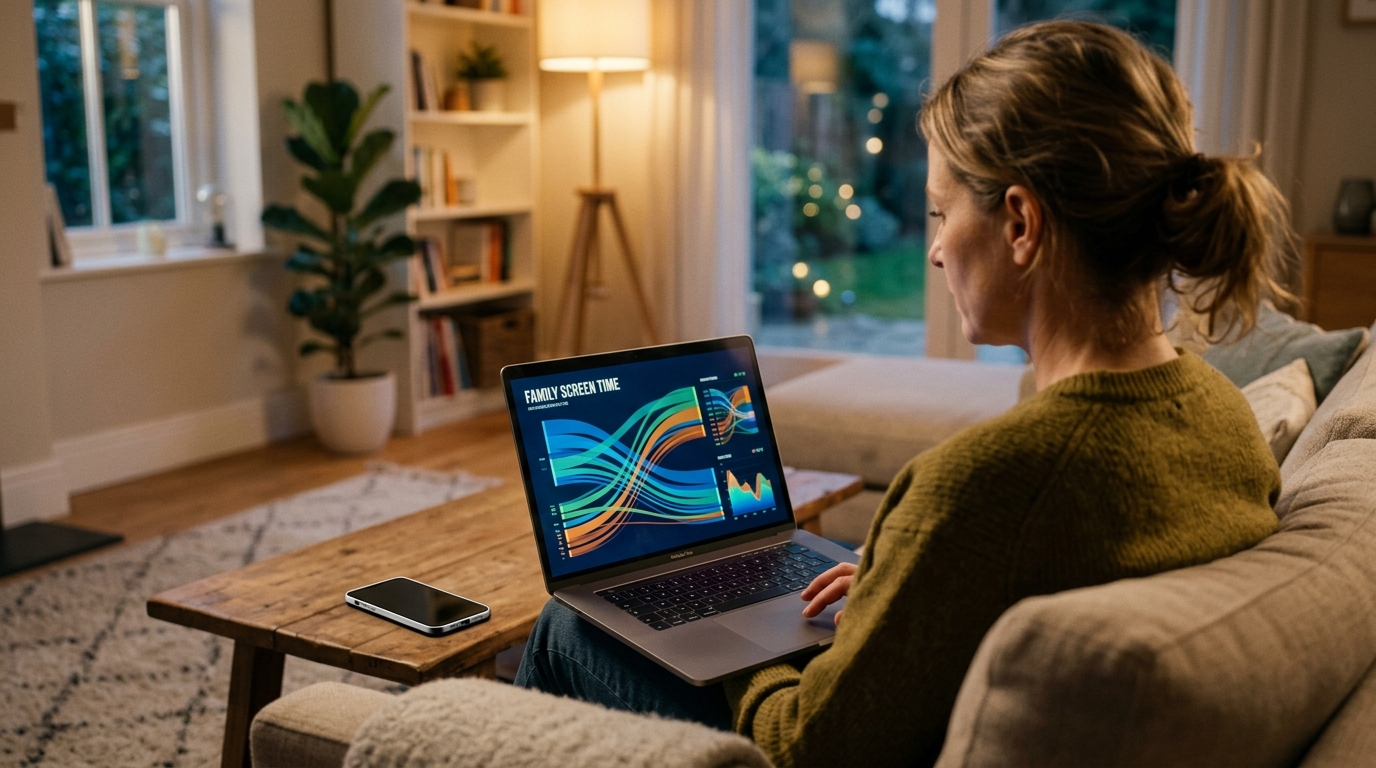
User tolerance for poor technological experiences has also plummeted. A 2026 trend analysis by industry analysts reveals that 70% of smartphone users will immediately delete an application if it fails to provide a fast, native experience on the very first try. Parents have adopted this exact mindset. They no longer have the patience for clunky, outdated tracking tools that crash or lag when fetching a simple status update.
Why Fragmented Messaging Defeats Manual Observation
Consider a typical evening in a modern household. A teenager might start a conversation using the Telegram app on their mobile device during the commute home. Later, while doing homework, they switch to WhatsApp Web on a shared family laptop. Before bed, they might open Telegram Web on a tablet.
Monitoring this scattered activity manually is an exercise in futility. Keeping tabs on a family's digital health shouldn't feel like surviving a tense, high-stakes chapter of The Last of Us, where parents are constantly on edge, waiting in the dark for a sudden status update to appear. It needs to be a passive, intelligent, and entirely stress-free process.
Furthermore, tech-savvy teenagers frequently experiment with unverified, high-risk third-party clients like GBWhatsApp to bypass standard visibility rules or access modified features. These third-party modifications obscure standard activity logs, making native, manual checks completely unreliable. Only an intelligent system designed to analyze cross-platform data can accurately map these hidden digital routines.
The Shift to Unified Pattern Analysis
This is where the transition from manual logging to pattern analysis becomes crucial. Instead of asking, "Was my child online at 2:00 AM?" families are now asking, "What does my child's baseline messaging behavior look like across all devices?"
As my colleague Hakan Türkmen explained in a recent post exploring what 100,000 users taught us about cross-platform digital parenting, the data reveals a mass exodus away from single-platform monitoring. Families are prioritizing comprehensive digital boundary-setting over granular micromanagement. They want to see the forest, not just the trees.
Broader mobile analytics firms are catching on to this requirement. Ecosystems built by mobile development companies like Activity Monitor demonstrate that multi-platform visibility is becoming the baseline standard for 2026. The technology is adapting to the reality of fragmented attention.

Establishing Your Family's Decision Framework
If you are realizing that your current approach to monitoring screen time is outdated, it is time to upgrade your methodology. When evaluating a new approach for your household, I recommend applying a strict set of selection criteria:
- Cross-Platform Fluidity: Can the methodology map habits consistently across mobile applications as well as browser-based sessions like WhatsApp Web and Telegram Web?
- Privacy and Trust Opt-ins: Does the architecture respect modern privacy standards? The Adjust 2026 report highlights that iOS App Tracking Transparency (ATT) opt-in rates actually grew from 35% in Q1 2025 to 38% in Q1 2026. This data proves that users are perfectly willing to share data when they trust the ecosystem and understand the value exchange.
- Actionable Intelligence Over Raw Logs: Does the system highlight unusual late-night routines, or does it merely hand you an overwhelming spreadsheet of timestamps?
Who Actually Benefits From This Evolution?
To be completely clear about the intended audience for these advancements: this technology exists to foster healthier family dynamics. Luna - Parental Online Tracker is an app designed to directly monitor and analyze last seen and online statuses for WhatsApp and Telegram across multiple devices. The target user profile consists of proactive parents and guardians who need to safeguard their teens' sleep schedules and online habits without resorting to confiscating their phones.
Equally important is knowing who this is not for. These unified measurement tools are absolutely not designed for suspicious partners seeking to track significant others, nor are they for employers attempting to log their staff's working hours. The architecture is built fundamentally around the concept of digital parenting and family safety.
If you want to move beyond the chaos of manual monitoring and establish a clear understanding of your household's digital boundaries, Luna - Parental Online Tracker's unified pattern analysis is designed specifically for that outcome.
The messaging environment will only become more complex as we move deeper into 2026. By embracing intelligent, multi-platform analysis now, you can eliminate the anxiety of manual checks and focus on what actually matters: guiding your family toward balanced, healthy digital habits.