
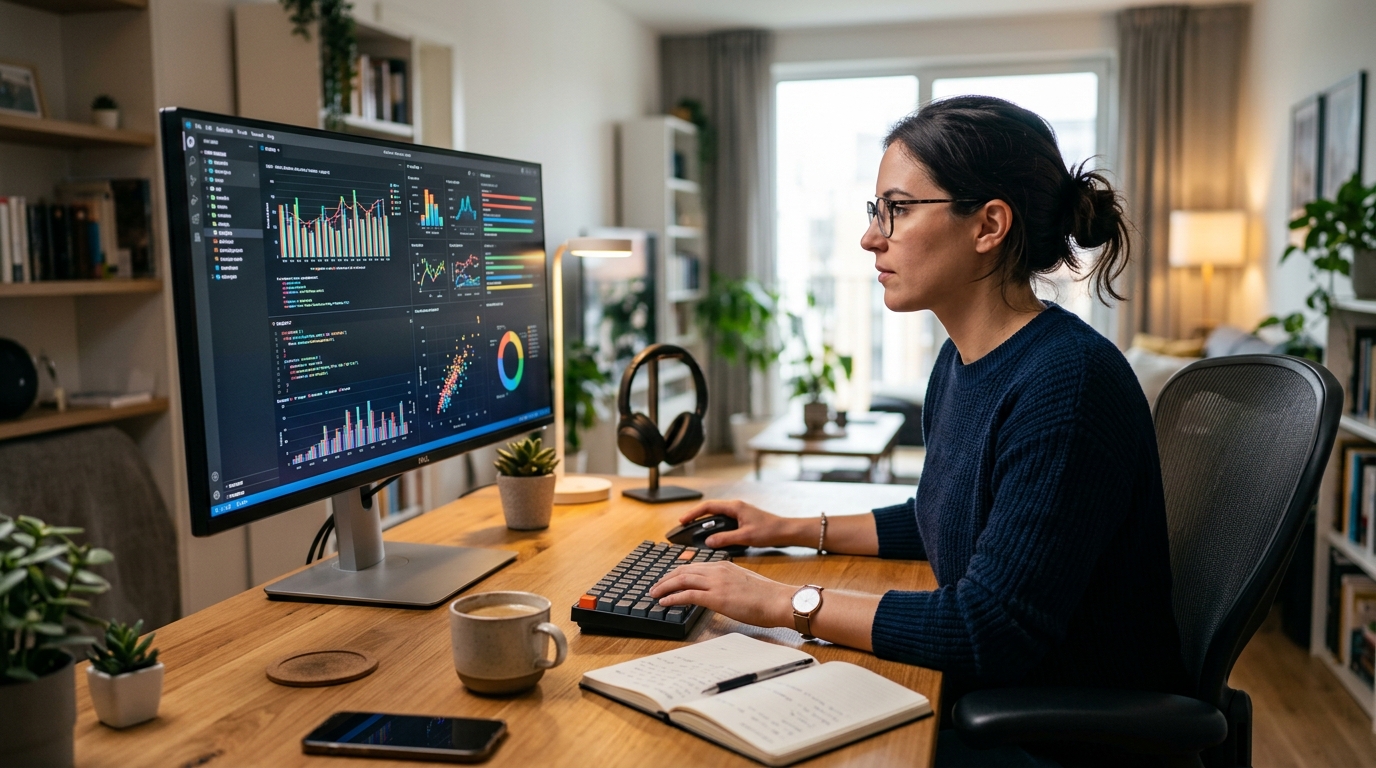
Global mobile app installations surged by 10% in 2025, and total session lengths increased by 7%, driving overall consumer spending to a staggering $167 billion. According to the recently published Mobile App Trends 2026 report by Adjust, the digital economy has firmly shifted away from single-channel interactions. Instead, the defining theme for 2026 is "Multi-Platform Measurement Architecture." Growth is no longer determined by observing an isolated application, but by analyzing integrated data management across multiple networks.
As a software engineer specializing in real-time messaging systems and notification technologies, I spend my days analyzing how data flows between distributed platforms. I see the exact same architectural shift happening inside our homes. Families are struggling to understand digital habits because they are still relying on single-channel observation methods in a multi-platform reality. Our children do not exist on just one network. They fragment their communication across multiple devices and interfaces, making the manual checking of statuses entirely obsolete.
Fragmented Communication Demands Unified Observation
To understand why manual tracking fails, you have to look at how modern messaging platforms operate. A user might start a conversation on their phone using the standard Telegram app, transition to a desktop computer and continue via WhatsApp Web while doing homework, and later switch to Telegram Web. Some teenagers even experiment with modified third-party clients like GBWhatsApp in an attempt to manipulate their online metadata.
When communication is this distributed, trying to manually open individual apps to check a timestamp is an exercise in futility. Ali Yalçın recently covered this exact problem in his piece on why cross-platform analysis is defeating native checks, highlighting how isolated observation creates blind spots. You end up with fragmented data that tells you nothing about actual behavioral routines.

If you want clear visibility into household digital habits without guessing, Luna - Parental Online Tracker is designed exactly for that purpose. Luna is a unified status analysis application that directly monitors WhatsApp and Telegram last seen timestamps, consolidating multi-platform activity into a single, cohesive dashboard. It functions as a personalized measurement architecture for your household, translating raw online and offline events into readable behavioral patterns.
Defining A Purpose-Built Tool For Families
When I evaluate any software tool, I look strictly at its core utility and its intended user base. Transparency about what a tool does—and what it refuses to do—is the foundation of trust.
Luna is built specifically for parents and guardians who need to verify healthy routines, such as ensuring children are actually sleeping at night rather than chatting online. It is designed for those who want objective data on device usage without violating their child's fundamental right to private communication.
Equally important is who this tool is NOT for. Luna is not for micromanagers seeking to intercept message content, read private conversations, or record screen activity. It operates entirely on public metadata—specifically the "last seen" and "online" status flags broadcasted by messaging servers. By separating behavioral measurement from content surveillance, the application provides necessary oversight while maintaining strict ethical boundaries.
Practical First-Use Scenarios Reveal Real Routines
When you first deploy a multi-platform tracker, the initial data can be surprising. Most families assume they understand their household's digital schedule, but the raw metadata often tells a different story. Here are three practical scenarios I consistently observe when families transition from manual checking to automated status tracking:
The Late-Night Device Switch
You establish a "phones out of the bedroom" rule, assuming this guarantees a good night's sleep. However, Luna might trigger an alert showing active Telegram Web sessions at 2:00 AM. A teenager might be using a school-issued laptop or an older tablet to chat after winding down from late-night sessions playing games like The Last of Us. Automated tracking catches the device-hopping behavior that manual checks miss.
The Homework Distraction Loop
During study hours, a child claims to be writing an essay on their computer. A quick glance at their phone shows they aren't using it. However, Luna reveals continuous, staggered online intervals via WhatsApp Web. The multi-platform tracking exposes that the computer is primarily being used as a messaging hub rather than a study tool, allowing you to have a specific, evidence-based conversation about focus.
The Platform Migration
If a parent successfully limits time on one platform, usage often migrates elsewhere. You might see WhatsApp activity drop off at 9:00 PM, only to see Telegram activity instantly spike. Unified alerts highlight this migration immediately, proving that the digital habit hasn't been curtailed—it has merely been relocated.
Privacy Awareness Is Shaping Modern Tracking
The technical framework surrounding tracking and privacy is maturing rapidly. The 2026 Adjust report notes that iOS App Tracking Transparency (ATT) opt-in rates have climbed to 38% in the first quarter of the year. This statistic is highly indicative of user sentiment: people are becoming increasingly selective about who accesses their data and how it is utilized.
As an engineer, I strongly advocate against installing heavy, invasive monitoring software on a child's device. Applications that require deep operating system permissions or "jailbreaking" introduce massive security vulnerabilities. Instead, intelligent tracking should rely purely on external data points. Because Luna simply observes the public signaling protocols of WhatsApp and Telegram servers, it requires no software installation on the target device. This ensures the physical device remains secure and the child's private data stays encrypted.
We apply this exact same philosophy across the broader development ecosystem. At Activity Monitor, our suite of tools—including Luna and Seen Last Online Tracker—is engineered to prioritize metadata analysis over invasive access. We build systems that give families the data they need to make informed decisions without compromising device integrity.
Sustainable Parenting Relies On Pattern Recognition
The volume of digital communication is not going to decrease. The 10% jump in app installations last year proves that our reliance on these networks is only accelerating. Trying to manually supervise this environment is like trying to monitor network traffic by reading individual data packets by hand—it is inefficient, exhausting, and ultimately ineffective.
As Hakan Türkmen detailed in his step-by-step guide on adapting to the 2026 shift in digital tracking, the future of digital parenting is pattern recognition. It is about understanding the rhythm of online activity rather than stressing over individual timestamps. By automating the collection of last seen data across multiple messaging platforms, Luna - Parental Online Tracker allows parents to step back. You stop acting as a manual monitor and start acting as an informed guide, equipped with the integrated data necessary to foster healthier digital habits.